
 0
0


 +971 54 547 0189


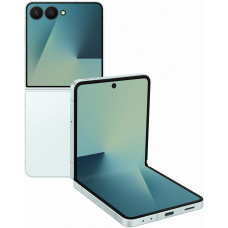
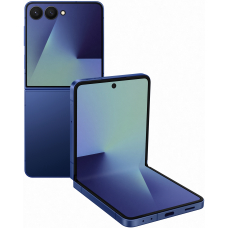
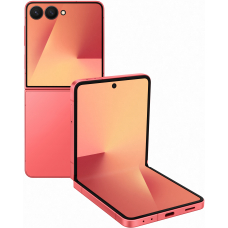
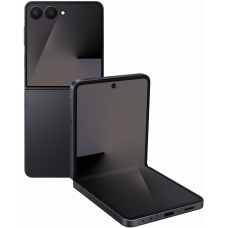
Samsung has introduced the new foldable smartphone Galaxy Z Flip 7, which succeeds the Flip 6 model. Both models are similar in appearance and concept, but the Flip 7 has important improvements in the details. Mainly, they concern the external display, body thickness, battery, and upgraded processor. If you already have a Flip 6, the difference might not seem huge, but it’s worth taking a closer look: the updates are noticeable and make the new smartphone more appealing.
In terms of design, the Galaxy Z Flip 7 really feels like a step forward, even if not a radical one. Samsung made the body slightly more compact: when folded, the thickness is reduced to 13.7 mm compared to 14.9 mm in the Flip 6. When unfolded, the smartphone is also more elegant — only 6.5 mm compared to 6.9 mm in its predecessor. The difference may seem minimal, but it is noticeable to the eye and in hand: the Flip 7 looks more refined. The weight has changed very little — 188 grams versus 187 grams for the previous model. Both phones feel light, especially compared to other foldable devices.
Samsung kept the premium materials, which is immediately noticeable. The frame is made of the proprietary Armor Aluminum alloy — stronger than regular aluminum and better at resisting impacts. The back panel and outer glass are covered with Gorilla Glass Victus 2, known for its resistance to scratches and drops. The internal flexible screen is traditionally protected by ultra-thin UTG glass. The hinge has become more compact, designed for thousands of openings and closings without play or creaks, so its durability is not a concern. The smartphone is certified to IP48 standard — it is dust-resistant and can handle rain or splashes of water, though swimming with it in a pool is, of course, not recommended.
The internal screen of the Galaxy Z Flip 7 has become slightly larger — now 6.9 inches compared to 6.7 inches in the Flip 6. The difference is not huge, but it is noticeable: movies or photos feel more spacious. The display uses LTPO AMOLED 2X technology and can adjust its refresh rate from 1 to 120 Hz. This means scrolling feeds or gaming remains extremely smooth, while reading text or idle usage lowers the rate to save battery. Peak brightness reaches an impressive 2600 nits, an excellent figure: even under direct sunlight, the image does not fade, and colors remain vibrant. The screen resolution is 2640 by 1080 pixels, with a density of around 425 ppi, so images look sharp and detailed.
The main difference in the new model lies in the external display. In the Flip 6, it was 3.4 inches, and in the Flip 7 it has increased to 4.1 inches. In practice, this is a significant upgrade: the screen is more convenient for interaction, it fits more widgets and text, and the phone can be used more often without unfolding it. Additionally, the refresh rate has doubled — now 120 Hz instead of 60. The smoothness of animations and interface responsiveness is immediately noticeable. Resolution has also increased — approximately 1048 by 948 pixels compared to 748 by 720 in the Flip 6. Small interface elements look cleaner, and photos appear sharper.
Looking deeper, the most noticeable difference between the two models is in the hardware. The Z Flip 7 received a completely new Exynos 2500 processor, built using the modern 3-nanometer process. This is not just numbers: the smaller the process, the lower the power consumption and higher the efficiency. This chip handles heat better, holds charge longer, and opens new opportunities for AI-powered features. Samsung is focusing on this — the Flip 7 has more functions related to smart photo, video, and voice command processing.
The Flip 6 houses the proven Snapdragon 8 Gen 3. This is also a top-tier chipset but built using the 4-nanometer process. Its power is enough for any games and heavy apps, but in the long term, the Exynos 2500 promises to be more efficient and “forward-looking” thanks to optimization for new versions of Android and One UI.
Samsung decided not to experiment with RAM: both the Flip 6 and Flip 7 have 12 GB LPDDR5X. This is more than enough to keep dozens of apps in the background while quickly switching between them. As for internal storage, the Flip 7 is available in 256 GB and 512 GB options — just like its predecessor. These are fast UFS 4.0 drives, providing lightning-fast app loading and file transfers.
Regarding software, the advantage again goes to the new model. The Z Flip 7 runs Android 16 out of the box with the One UI 8 skin. This means it will receive security updates longer and gain more new features. In comparison, the Flip 6 launched with Android 14 and One UI 6, and although it has received updates, its support “lifecycle” is still shorter.
Here there is also progress. The Galaxy Z Flip 7 received a 4300 mAh battery, while the Flip 6 had a 4000 mAh battery. The numbers may seem close, but in reality, it provides an extra hour or two of active use. The new processor, which works more efficiently, helps significantly.
Charging speeds remain the same: wired 25 W, wireless 15 W, and reverse charging for accessories is available. Full charging time is almost unchanged: about one and a half hours, possibly slightly longer due to the increased capacity. As a result, the Flip 7 has become more practical for everyday use and holds charge longer, especially if you often use the external display.
Speaking of cameras, Samsung decided not to break a successful setup but just slightly refine it. The new version has the same main camera pair as the Flip 6: a 50-megapixel primary sensor with optical stabilization and f/1.8 aperture, plus a 12-megapixel ultra-wide lens with a roughly 123-degree field of view. For selfies, the 10-megapixel front camera hidden in the internal screen is still used. On paper, it seems there are no changes, but in practice, the differences are noticeable.
The main difference lies in image processing and algorithms. In the Flip 7, Samsung focused on more natural color reproduction: photos look warmer, skin tones closer to reality, and greenery and skies appear more vibrant. At the same time, the images do not appear oversaturated; the picture looks balanced. In challenging lighting conditions, such as sunsets or night shots, the new smartphone reproduces shadow details more accurately and better controls bright areas. The dynamic range has widened, making shots appear more three-dimensional.
The ultra-wide camera remains formally the same, but thanks to improved image processing, there is noticeably less noise, especially at the edges of the frame. Shots are slightly cleaner and more detailed, which is particularly noticeable when shooting architecture or landscapes.
Regarding zoom, the situation is familiar: neither model has a separate telephoto lens, so zoom is digital. However, in the Flip 7, the software algorithms have been refined — even at 3–4x magnification, the image retains more detail and small objects appear sharper. Of course, this is not a replacement for real optical zoom, but for everyday use, the result is quite decent.
The front camera remains 10 megapixels, and its quality has also been slightly improved. Selfies on the Flip 7 look more natural, with better skin and background rendering. Additionally, remember that selfies can also be taken using the main cameras, using the external display as a viewfinder. Here, the increase in size to 4.1 inches is advantageous — framing has become easier, and the quality of shots is significantly higher than with a regular front camera.

 Colin D.
Robert O.
Katie B.
Randy L.
Colin D.
Robert O.
Katie B.
Randy L.
 Anna
Anna