Apple AirPods 5: The Open-Ear Design Has Become More Practical
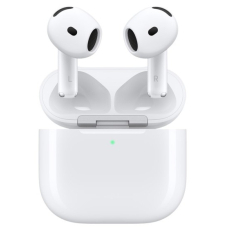
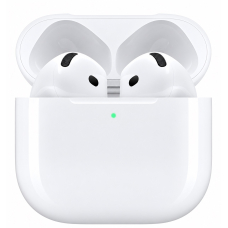
AirPods 5 continue Apple's open-ear headphone concept, but they now interact with surrounding noise much more effectively. Compared with AirPods 4 with active noise cancellation, ANC effectiveness has increased by up to 1.5 times, meaning the claimed improvement reaches 50%. For an open-ear design, this is particularly interesting: previously, this format almost inevitably lagged behind in-ear models in terms of isolation. Now the gap has become smaller. At the same time, Apple has retained the lightweight fit without silicone ear tips. There are two versions: the standard model with USB-C and a variant with a wireless charging case, swipe volume control, and longer battery life. The model with the Wireless Charging Case lasts up to five hours with ANC, compared with four hours for AirPods 4 — an increase of 25%. Brightness and cameras are obviously not applicable to headphones, so comparing them in percentages would make no sense.
Fit and Comfort
Visually, AirPods 5 do not try to imitate miniature in-ear monitors. The housing remains open, the stem is short, and the shape has been redesigned to distribute pressure more precisely across the ear. Each earbud weighs 4.3 grams, so after a while its presence is barely noticeable. The dimensions are 30.2 × 18.3 × 18.1 mm. The standard version's case weighs 32.3 grams, while the wireless charging version comes in at 34.7 grams. Compared with AirPods 4, the design has become not so much lighter as more functional: IP57 protection against dust, sweat, and water has been added. For running, commuting, or a long walk, this is much more useful than saving a few grams.
Sound and Noise Cancellation
The main change is hidden inside. A new multi-port acoustic architecture works together with an adaptive equalizer, making the sound feel fuller and more detailed. The low frequencies are tighter, vocals remain clear instead of getting lost behind instruments, and at higher volume there is less of a sense that separate frequency ranges blend into one mass. However, an open-ear fit remains an open-ear fit: some of the outside world can still be heard even when ANC is enabled. Noise cancellation already helps noticeably on the subway or on a plane, but it will not completely eliminate a nearby conversation. Transparency mode feels more natural, while Adaptive Audio automatically adjusts the balance between ambient sound and noise cancellation. This makes AirPods 5 more convenient in the city, where constantly switching between modes can quickly become annoying.
Controls and Features
The H2 chip handles the processing. Pressing the stem can pause music, answer a call, or switch listening modes. The version with the wireless charging case adds an upward or downward swipe on the stem to adjust the volume — a small detail, but it means reaching for the smartphone less often. Two beamforming microphones and Voice Isolation help during calls. There is Personalized Spatial Audio with head tracking, Siri AI, gestures for interacting with Siri, and Live Translation. When paired with an iPhone, this turns the earbuds from a simple music accessory into part of the everyday interface: you can watch YouTube, reply to messages, take calls, use navigation, and control playback without constantly reaching for the phone.
Battery Life and Charging
The standard AirPods 5 with active noise cancellation provide up to four hours of music playback on a single charge, while the case increases the total to 20 hours. The version with the Wireless Charging Case lasts up to five hours and provides up to 22 hours in total. Five minutes in the case provide approximately one hour of listening time, so a short charge before heading out is genuinely useful. In real-world use, music consumption is predictable, while calls and continuous ANC noticeably reduce battery life. This is enough for a working day, but for a long trip, the case remains an essential part of the setup.
Final Thoughts After Several Days
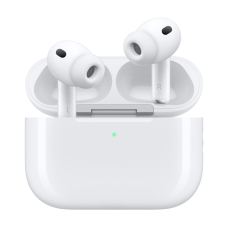
After several days, AirPods 5 feel more like an evolution of a familiar design than a completely new type of headphones. Their main strength is the combination of an open-ear fit and ANC, something that previously seemed contradictory. A student can comfortably listen to lectures and music for extended periods, noise cancellation is useful while commuting, and in the office, automatic volume reduction during conversations can come in handy. The compromise is obvious: the open design cannot provide the same level of isolation as in-ear AirPods Pro, while four hours of battery life for the standard version is not a particularly large reserve. Therefore, the choice between the two AirPods 5 versions primarily depends on how important wireless charging, stem-based volume control, and the additional hour of battery life are.



 0
0