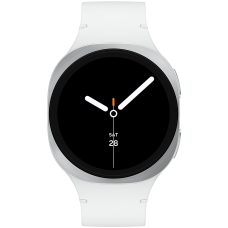
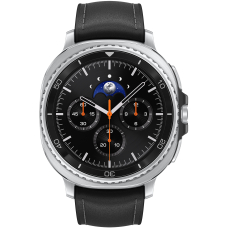
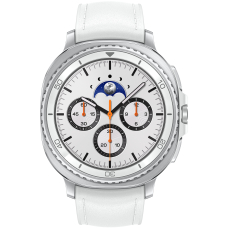
In the summer of 2025, Samsung introduced the Galaxy Watch 8, immediately raising a natural question: how do they differ from last year’s Galaxy Watch 7? Overall, the Galaxy Watch 8 is not a revolution, but an evolution in the best sense of the word. The seventh series was already successful — stylish design, rich functionality, excellent display, and good battery life. But in the Watch 8, the company added several important improvements that are noticeable in practice.
Design
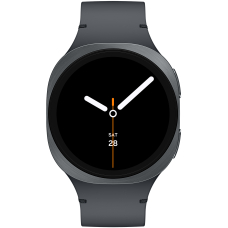
The Galaxy Watch 7 had a very Samsung-like look: classic round case, neat lines, aluminum frame, and sapphire glass on top. Thickness was about 9.7 mm, making the watch look elegant, though still noticeable on the wrist. The Watch 8 approached this differently. The case became thinner: standard models are about 8.6 mm thick, and the Watch 8 Classic is around 10.6 mm. On paper, the difference seems small, but in real life, the new watch sits noticeably more comfortably on the wrist. The case shape became softer, described as "cushion-shaped": slightly rounded edges make the watch look more modern and less protruding.
Weight differences are noticeable too. The Galaxy Watch 7 weighed 28.8 g for the 40 mm version and 33.8 g for the 44 mm version. In the Watch 8, these numbers increased slightly: 30 g and 34 g respectively. So the lightness remains, and the watch still barely feels on the wrist throughout the day. The Classic version, however, weighs about 63 g, giving a sense of solidity. Along with the weight comes premium quality — steel, sapphire glass, and the mechanical rotating bezel that was missing in the previous model. It not only adds style but also makes operating the watch tactile and intuitive.
Protection remains consistent: both the Galaxy Watch 7 and Watch 8 have 5ATM and IP68 ratings. This means you can swim in a pool, shower, and not worry about dust. It’s nice that Samsung doesn’t skimp on such things — in watches of this category, protection is already considered a basic standard.
Color options have changed. The Galaxy Watch 7 was available in green, cream, and silver. The Watch 8 palette is more restrained but stylish: the standard version comes in graphite and silver, while the Classic is offered in black and white. This choice feels more versatile: graphite and black suit formal looks, silver and white for a light, everyday style. Additionally, with thinner bezels, the display appears larger, and the watch feels more modern.
Display
While the Watch 7 already had a good display — bright AMOLED with deep blacks and Always-On Display — the Galaxy Watch 8 takes it to a flagship level. The main difference is brightness. Last year’s model had a maximum of about 2000 nits, while the eighth generation reaches 3000 nits. This isn’t just a number: in sunlight, the screen remains clearly readable, and even on the brightest summer day, you don’t need to squint to see notifications or a map.
Display sizes remain familiar: the 40 mm version has about 1.3 inches with 432×432 pixels, and the 44 mm has 1.47 inches with 480×480 pixels. Pixel density is almost unchanged, but thanks to panel improvements and higher contrast, images on the Watch 8 look more vivid and detailed. Colors are slightly more vibrant, and white appears cleaner and brighter. Even small interface elements and thin fonts are now easy to read.
The key advantage — sapphire glass protection — remains. It is present in both Watch 7 and Watch 8, but in the new model, the manufacturer claims the coating is even more scratch-resistant. For daily use, this is a big plus: you don’t have to worry if the watch accidentally hits a door frame or exercise equipment.
The Always-On Display technology also remains, but in Watch 8 it works smarter. The screen automatically adjusts brightness to lighting conditions, and even when the dial is constantly on, information stays readable. Watch 7 also had this, but adaptation to bright light is now noticeably better.
Technical Specifications
Both series — Galaxy Watch 7 and Watch 8 — are built on the Exynos W1000 processor. It’s a new-generation chip made with a 3-nm process. But it’s not just the hardware that matters, but how it works with the software. In the eighth series, Samsung improved optimization: the interface is more responsive, menu scrolling is smoother, and apps open faster. The difference is noticeable in everyday use, switching from notifications to workouts or scrolling through weather and music tiles.
Memory is also interesting. The Galaxy Watch 7 had 2 GB RAM and 32 GB storage, enough for regular use: apps, watch faces, a bit of music. In the Galaxy Watch 8 Classic, Samsung doubled storage to 64 GB, allowing full playlists, offline maps, and more without worrying about space. RAM remains 2 GB, and with the new optimization, it’s sufficient.
Software differences are present too. Watch 7 shipped with Wear OS 5 and One UI Watch 6, while Watch 8 comes with Wear OS 6 and One UI Watch 8. The difference is in details: smoother animations, redesigned menus, new widgets, and convenient notifications. Plus, Watch 8 supports features out of the box that may come later or never to Watch 7. Importantly, as a new model, Watch 8 will receive updates longer, ensuring relevance for years.
Battery
Battery life is always a key point. Smartwatches should be not only stylish and functional but also keep up with daily routines. The Galaxy Watch 7 had a decent battery: 300 mAh in the 40 mm version and 425 mAh in the 44 mm. That lasted about a day of active use — at best around 30 hours if you economized. For many, this meant charging every night.
Galaxy Watch 8 offers slightly more. The smaller version has 325 mAh, and the 44 mm model 435 mAh. On paper, that’s only a few percent more, but in real life it’s noticeable. Tests show the Watch 8 can run up to 40 hours in normal mode. If you disable Always-On Display and some sensors, it can last two days — a real improvement for those who don’t like frequent charging.
Fast charging remains but became slightly more convenient. About 30 minutes is enough to restore 45% of the battery, and full recharge takes just over an hour. This is useful when you need the watch for a workout or trip and don’t have time to wait. Just put it on charge while getting ready, and it’s ready to go.
Energy-saving modes were improved. When battery is low, the watch can automatically enable power-saving: secondary functions are disabled, the screen dims, but main functions — notifications, step counter, time — continue. Even at 10% charge, it can last a few more hours, which is a lifesaver on the go.
The combination of the Exynos W1000 processor and Wear OS 6 optimization pays off. Watch 8 uses less energy for background apps and better manages sensor activity. In Watch 7, this was a weak point: the watch drained faster during active GPS or long workouts. Now energy consumption is more balanced.
Functions
Sensor set largely remains the same: heart rate monitor, blood oxygen (SpO₂), ECG, blood pressure monitoring, BIA body composition sensor, accelerometer, gyroscope, and barometer. But Watch 8 adds new capabilities for more advanced health tracking. For example, the improved skin temperature sensor works faster and more accurately. Another addition is the Vascular Load feature, analyzing vascular stress and showing how the body handles daytime loads and recovers at night.
Sleep tracking was also upgraded. While Watch 7 tracked phases and gave basic advice, Watch 8 goes deeper: detecting micro-awakenings, analyzing cycles in more detail, and offering tips for better sleep. AI elements add smart suggestions, personalized recommendations, and a more user-friendly interface. This makes the new watch not just a tracker, but a full assistant for health and daily activity.
For sports, Watch 8 is also more convenient. Activity tracking algorithms are updated, GPS is more accurate, and the system responds faster to load changes. Workouts are recorded more accurately. Additionally, Samsung added new indicators, such as an antioxidant index, allowing evaluation of lifestyle impact on the body.



 0
0