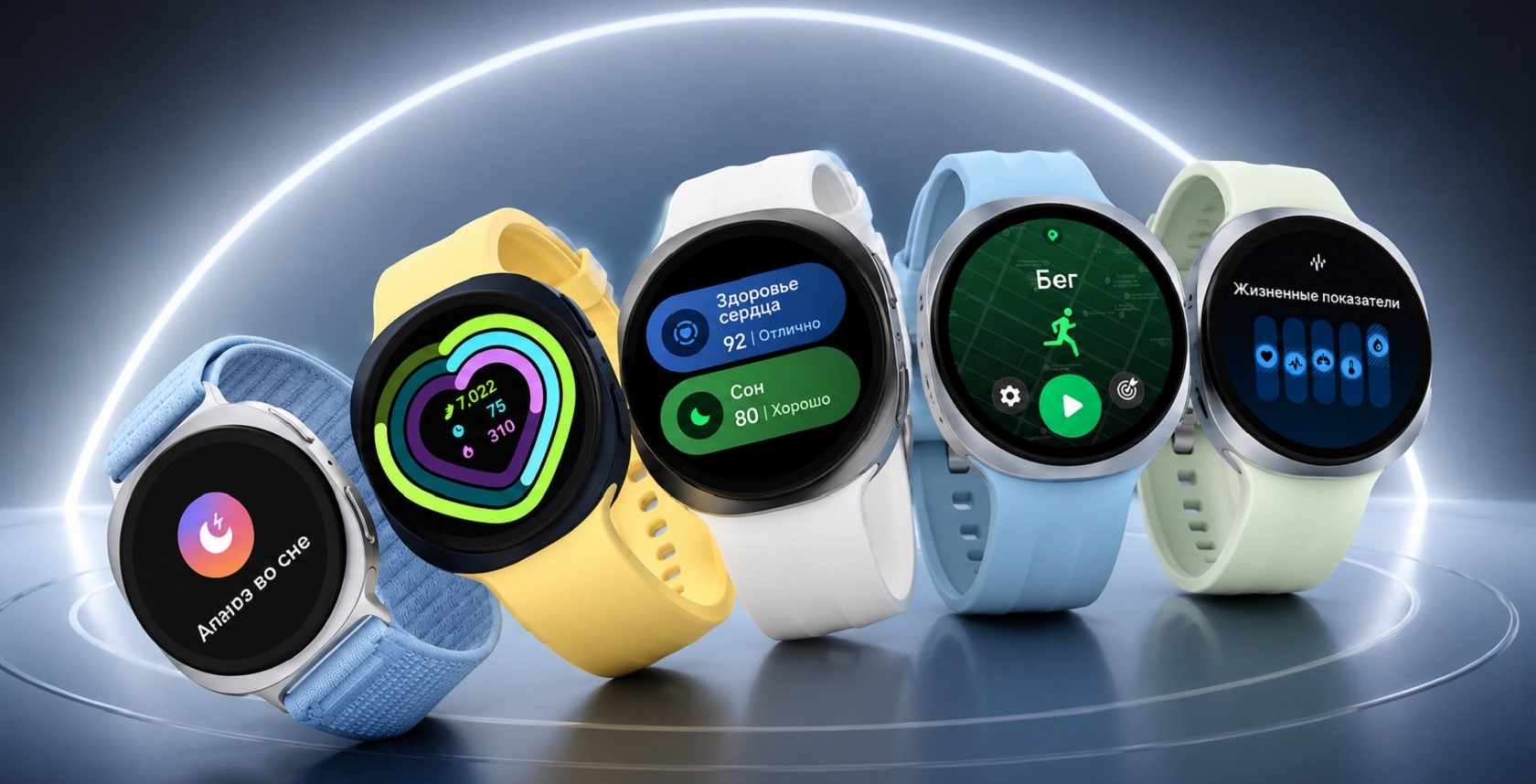
Samsung Galaxy Watch9: What Has Changed Compared to Watch8
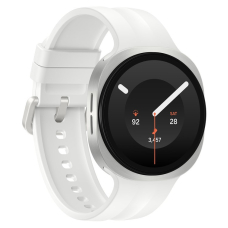
The Galaxy Watch9 retains its familiar position as Samsung's main smartwatch model, but the update is more of a refinement than a major redesign. The key changes are inside: the Exynos W1000 has been replaced by the Snapdragon Wear Elite, while the battery has become noticeably larger in the 40 mm version. At the same time, the display retains its peak brightness of 3,000 nits, and the manufacturer's claimed 40-hour battery life remains unchanged compared with the Watch8. There is no built-in camera, so it would be incorrect to talk about an increase in image detail or dynamic range in percentage terms. The new model is aimed more at users who need notifications, GPS, music, workouts, and sleep tracking without constantly reaching for their smartphone. Students will appreciate quick access to messages and schedules, while those who spend a lot of time outdoors will benefit from the easy-to-read display.
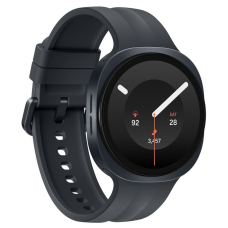
Externally, the Watch9 is almost identical to the Watch8. The case is made of aluminum, sapphire crystal is used on top, and the shape remains familiar from Samsung's latest generations. The thickness is 8.6 mm, meaning it has not become thinner compared with the Watch8. The 40 mm version weighs 31.5 g versus 30 g for its predecessor, while the 44 mm model weighs 34 g, the same as the Watch8. On the wrist, the watch feels solid enough without creating a noticeable imbalance toward the case. The strap with the Dynamic Lug system keeps the sensors closer to the skin, so the case moves less during walking and workouts. The matte surface is more practical than a glossy finish: fingerprints are still visible, but they disappear quickly after a light wipe.
Display and Everyday Use
The Super AMOLED display has a resolution of 438×438 pixels in the 40 mm version and 480×480 in the 44 mm model. Peak brightness reaches 3,000 nits, which means the increase compared with the Watch8 is 0%: Samsung has retained the previous figure. The watch face remains easy to read in direct sunlight, while the deep black background helps conserve energy. Colors are vivid without feeling excessively saturated when a more restrained watch face is selected. There is no camera on the watch, so it cannot take photos by itself; however, the Watch9 can be used as a remote shutter for the camera of a compatible smartphone.
Performance and Software
The main hardware upgrade is the five-core Snapdragon Wear Elite platform with clock speeds of up to 2.1 GHz and 1.95 GHz. The watch has 2 GB of RAM and 32 GB of storage. Compared with the Exynos W1000 in the Watch8, the interface feels faster, especially when launching applications and switching between screens. Messages open without noticeable pauses, navigation displays routes more quickly, music does not make you wait, and simple games run predictably. YouTube and social media services on a small display remain a compromise, so the real advantage here is not raw power itself but improved responsiveness.
The watch comes with Wear OS 7 and the One UI 9 Watch interface. Animations are smooth, the menus are logically connected with the Samsung Health app, and the new Galaxy AI suggestions primarily work with sleep, activity, and recovery data. Energy Score and daily routine recommendations have become a noticeable part of the overall experience. At the same time, the Watch9 remains close to other Wear OS competitors in terms of interface philosophy. Samsung's main distinction is the tight integration of the watch with Galaxy smartphones and the company's ecosystem of services.
Battery and Charging
The most noticeable change concerns the 40 mm version: its battery capacity has increased from 325 to 390 mAh, which is a 20% increase. The 44 mm Watch9 has a 445 mAh battery compared with 435 mAh in the Watch8, representing an increase of approximately 2.3%. At the same time, the official estimate remains unchanged — up to 40 hours with Always-On Display turned off and up to 30 hours with it enabled. In real-world use, battery consumption depends more heavily on GPS, LTE, workouts, and screen brightness. An hour of navigation or an active workout noticeably accelerates battery drain, while Bluetooth music and regular notifications consume power more moderately. For this reason, the 40 mm version looks more practical for those who want to think about charging less often.
After several days with the Galaxy Watch9, it feels less like a completely new concept and more like a careful refinement of a familiar formula. The main arguments in its favor are the newer processor, the larger battery in the 40 mm version, the bright display, and expanded health features. The upgrade from the Watch7 feels more noticeable, while Watch8 owners may find it worthwhile to switch mainly for the new processor and larger battery in the smaller version. The compromises are also clear: the case has barely changed, the display has not become brighter, and there is still no built-in camera. Overall, the model handles everyday tasks — notifications, music, GPS, workouts, sleep tracking, and quick replies — but the value of the upgrade largely depends on which generation is already on your wrist.



 0
0