
 0
0


 +971 52 303 0646


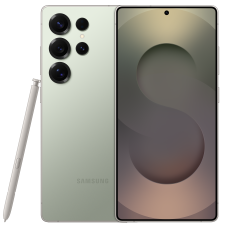
Every year we eagerly anticipate what Samsung will come up with in the new Galaxy series. The year 2025 was no exception — the Galaxy S25 Ultra has arrived. A flagship in every sense: powerful, stylish, and technologically advanced. But how much better is it than its predecessor? And more importantly — is it worth upgrading from last year’s model?
At first glance, both smartphones look similar — large, solid, with premium materials. But when you hold the S25 Ultra in hand, you feel the difference.
The main change is more rounded corners. If the S24 Ultra was strict, rectangular, and somewhat “laptop-like,” the S25 Ultra looks a bit friendlier. Its edges are softer, the body is thinner (8.2 mm vs. 8.6 mm), and it weighs 221 g instead of 233 g — just 12 g lighter, but it feels nicer in hand.
The body is still titanium like the S24 Ultra, but the color palette has been updated. The colors of the S25 appear calmer and more restrained — Samsung seems to aim for a more universal flagship. One advantage of the S24 Ultra was its vibrant colors: lemon, emerald, lavender, and terracotta.
Protection remains the same: IP68 — the devices are water and dust resistant. The smartphones now feature updated Corning Gorilla Armor 2 glass, which is stronger, better protects against scratches, and significantly reduces glare.
On paper, the screens of the two models seem almost identical: the previous version had a 6.8-inch display, the new one slightly larger at 6.9 inches. Both use high-quality AMOLED 2X panels with adaptive refresh rates from 1 to 120 Hz and high QHD+ resolution, ensuring sharp and detailed images. Peak brightness reaches up to 2600 nits. In practice, the S25 Ultra’s screen feels “cleaner” — fewer reflections in sunlight, calmer and more contrasting colors, especially during daylight. This is thanks to the new protective glass.
Bezels are thinner by about 15%. Not hugely noticeable, but the image seems to float above the body. Watching videos, reading, scrolling TikTok — everything feels slightly more pleasant and “airy.”
Also, the curved edges are gone. The screen is fully flat like the S24 Ultra, but the rounded body shape makes it more comfortable to hold.
Here’s where it gets interesting. Inside the Galaxy S25 Ultra is the Qualcomm Snapdragon 8 Gen 4, specifically the “Elite for Galaxy” version. This isn’t just a top chipset — it’s specially tuned for the flagship. It’s more powerful, faster, and importantly — generates less heat. Gaming, 8K video, photo and video editing — everything runs smoothly.
The predecessor had the Snapdragon 8 Gen 3 for Galaxy, which is also good, but in synthetic benchmarks, the new chip shows 20–25% better performance. Graphics performance rivals high-end laptops. You can even render video directly on the phone.
RAM remains 12 GB, but storage starts at 256 GB and goes up to 1 TB. MicroSD support is still absent.
An interesting addition is the more active artificial intelligence. Galaxy AI gained new features: it can now suggest text while typing, translate phone calls in real time, and remove background noise from video — all on-device without internet.
Both smartphones have a 5000 mAh battery. Fast charging is 45 W wired and 15 W wireless. But thanks to the new processor and optimizations, the Galaxy S25 Ultra lasts slightly longer — roughly 1–2 hours more with active use. Not revolutionary, but nice.
A full charge easily covers a whole day: social media, camera, games, music, and even 4K video. With moderate use, you can stretch it to a day and a half.
The main camera retains the impressive 200 MP sensor with upgraded optics and new image processing. Photos are softer and more natural — especially noticeable on faces and in challenging lighting. The new algorithm makes shots less “overprocessed.”
The main improvement is the ultra-wide camera: the S24 Ultra had 12 MP, while the S25 Ultra now has 50 MP. Quality has improved dramatically: more details, less noise, especially at night.
Telephoto lenses remain unchanged: 3x and 5x optical zoom, digital up to 100x. The front camera is still 12 MP but works with new AI — auto-enhancing selfies, removing noise, and brightening faces.
Now you can also edit photos directly in the gallery using AI — for example, remove a passerby or move an object within the frame. Like Photoshop, but simpler.

 Colin D.
Robert O.
Katie B.
Randy L.
Colin D.
Robert O.
Katie B.
Randy L.
 Anna
Anna