
 0
0
New


 +971 52 303 0646


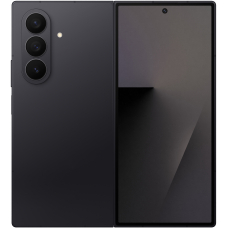
Galaxy Z Fold 7 — Samsung's new foldable flagship, released in 2025, immediately became a topic of discussion. It is thinner, lighter, and more powerful than its predecessor, the Fold 6. For those accustomed to using a foldable smartphone as a versatile tool for work, reading, and entertainment, the new model offers several significant updates. However, as is often the case, not all changes are radical, and the Fold 6 remains a relevant option. Let's explore what exactly distinguishes the Fold 7 from the Fold 6 and whether upgrading makes sense.
Samsung always emphasizes that foldable models should look not only technological but also stylish. In the Galaxy Z Fold 7, this is especially noticeable: the body is thinner, lighter, and feels much more modern. The main innovation is the use of the new Corning Gorilla Glass Ceramic 2. It is stronger and more scratch-resistant than the previous Victus 2 used on the Fold 6. The updated Armour Aluminium frame makes the phone more durable, reducing the chance of chips or dents even with active use. In hand, this is immediately noticeable — the smartphone feels more solid and premium.
The Fold 7’s dimensions are more convenient for everyday life. Opened, it measures 158.4 × 143.2 × 4.2 mm, and folded — 158.4 × 72.8 × 8.9 mm. It weighs only 215 grams. By comparison, the Fold 6 was noticeably bulkier: opened — 153.5 × 132.6 × 5.6 mm, folded — 153.5 × 68.1 × 12.1 mm, and weighed 239 grams. While the millimeter differences may seem minor, the real-world feel is substantial. The Fold 7 feels much lighter, easier to hold with one hand, and doesn’t pull down the pocket as noticeably as the Fold 6.
The hinge should not be forgotten. On the Fold 7, it is noticeably thinner and neater, and the crease on the screen is less pronounced. This is not only aesthetic but also practical: the smartphone looks more solid and folds/unfolds more smoothly than before.
Both devices have an IP48 rating for protection. This means the smartphones are dust-resistant and can withstand contact with water, such as rain or accidental splashes. However, swimming with them is still not recommended, and the manufacturer clearly warns about this.
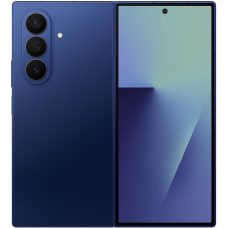
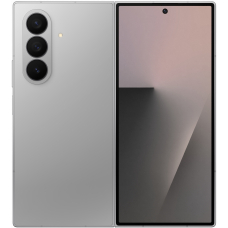
Regarding colors, the Fold 7 is bolder. Available shades include Blue Shadow, Silver Shadow, Jetblack, and Mint. The last is particularly fresh and distinctive, often offered as an exclusive. These colors play with light reflections and emphasize the device’s premium character. The Fold 6 palette was more calm and conservative.
The display is the main “highlight” of foldable smartphones, which is why many choose the Fold series. In the Galaxy Z Fold 7, Samsung went further: the inner display is slightly larger — 8 inches versus 7.6 inches on the Fold 6. On paper, the diagonal increase seems small, but when opening the smartphone, the difference is noticeable: more screen space for reading, multitasking, and watching videos.
The technology remains familiar — Dynamic AMOLED 2X with LTPO, meaning the display can dynamically adjust its refresh rate from 1 to 120 Hz. This ensures smooth visuals while saving power when the screen is idle. Peak brightness has increased to 2600 nits, which is very noticeable in sunlight. Even on the brightest day, text remains readable and colors vivid. The Fold 6 had a maximum brightness of 2400 nits, impressive as well, but the new model clearly has more headroom.
The external display has also changed. Its diagonal is now 6.5 inches, compared to 6.3 inches on the Fold 6. But it’s not just about numbers. The display is more elongated, with an aspect ratio closer to standard smartphones, making it more convenient to use when folded. On the Fold 6, the external screen was slightly “shorter and wider,” which many found less comfortable: typing long messages felt cramped, and the keyboard seemed compressed. These issues have been addressed in the Fold 7, making the external display comfortable for full browsing, messaging, and video watching.
The picture quality is worth mentioning separately. The main screen resolution is 2160 × 1856 pixels, with a density of about 374 ppi. The Fold 6 had a slightly lower resolution — 2176 × 1812 pixels — but due to the diagonal difference, the density was around 373 ppi. Overall, both displays are very sharp, but thanks to scaling optimization, images on the Fold 7 look slightly more harmonious. The external screen on the Fold 7 has also been improved: resolution 2376 × 968 pixels versus 2376 × 986 on the Fold 6. The difference is minimal, but combined with the new format, it feels more comfortable to use.
When it comes to hardware, the Z Fold 7 has clearly advanced. It features the latest Snapdragon 8 Elite for Galaxy processor, built on a 3-nanometer process. This solution is more powerful, faster, and energy-efficient than its predecessor. Tasks involving AI, machine learning, or complex 3D graphics show noticeable improvements: the Fold 7 works faster and heats up less. In comparison, the Fold 6 had the Snapdragon 8 Gen 3 for Galaxy, which was top-of-the-line at its release but now lags behind in speed and efficiency.
This is confirmed by benchmark numbers. For example, in AnTuTu, the Fold 7 scores around 2.2 million points, while the Fold 6 reaches approximately 1.7 million. In Geekbench 6, the single-core score of the new phone exceeds 2300, whereas the Fold 6 is around 2200, and the multi-core advantage is even more noticeable — about 7400 versus 7200. For regular users, this translates into faster app loading, smoother multitasking, and better performance in graphically intensive games.
Samsung offers flexible memory options. Both smartphones come with 12 or 16 GB of RAM, and internal storage options are 256, 512 GB, or a massive 1 TB. This allows storing large media libraries and working with big files without relying on the cloud. The Fold 7 uses faster UFS 4.0 memory, ensuring quicker app loading and data transfer. The Fold 6 also has UFS 4.0, but in the new model, memory and processor optimization work more seamlessly.
Another distinction is software. The Fold 7 ships with Android 16 and One UI 8. The focus is on Galaxy AI: smart suggestions, improved real-time translation, text and image generation, and productivity features like automatic summarization of notes or chats. The Fold 6 launched with Android 14 and One UI 6 and gradually updates, but many AI features arrive later or not at all.
Connectivity has also improved. The Fold 7 uses the Snapdragon X75 modem for more stable 5G connections and better performance in weak signal areas. The Fold 6 has the X70 modem, which is fast, but the Fold 7 maintains a more confident connection in direct comparison.
Interestingly, both models have the same battery capacity — 4400 mAh. However, thanks to the new processor, the Fold 7 lasts longer: it can play video for up to 24 hours, while the Fold 6 managed about 23 hours. In practice, during heavy tasks the difference may not always be noticeable, but under normal use, the Fold 7 does last slightly longer.
Charging speed remains the same: wired charging at 25 W, wireless at 15 W, and reverse wireless at 4.5 W.
The cameras in the Galaxy Z Fold 7 are where the real leap is felt. Previously, foldable smartphones were seen as having compromise cameras, but Samsung proved otherwise. The highlight of the Fold 7 is the new 200 MP main module. It features optical stabilization, a large sensor, and an f/1.7 aperture lens. By comparison, the Fold 6 had a 50 MP sensor with f/1.8 aperture. The difference is enormous: the new module captures more light, producing sharp, detailed shots even in evening conditions. Dynamic range has expanded, making photos more vibrant and deep — without shadow clipping or highlights blown out.
The telephoto camera remains largely unchanged: a 10 MP module with 3x optical zoom and stabilization. However, thanks to the Snapdragon 8 Elite processor and updated post-processing algorithms, photos on the Fold 7 are sharper and less noisy when zoomed. The ultra-wide lens also keeps 12 MP resolution with a ~120° field of view, but colors are richer and distortion correction more accurate.
Front cameras deserve separate attention. The external screen retains the familiar 10 MP camera with f/2.2 — it was already decent. But under the inner screen, there’s a breakthrough. Fold 6 had only a 4 MP module, often criticized for poor selfie and video call quality. Fold 7 features a full 10 MP camera with f/2.2 aperture, making video calls through Zoom or Teams clear and natural, without the under-display camera feeling like a temporary solution.
Regarding video, both models support 8K recording at 30 fps and 4K at 60 fps. But Fold 7, with improved optics and processing, records videos with richer colors, better detail, and smoother stabilization. Slow-motion modes are also supported: 960 fps in HD and 240 fps in Full HD.

 Colin D.
Robert O.
Katie B.
Randy L.
Colin D.
Robert O.
Katie B.
Randy L.
 Anna
Anna