Menu


 +971 52 303 0646
The customer support service is open from 9:00 to 20:00, seven days a week.
- Mobile+971 52 303 0646
- Mobile+971 52 303 0646
We'll call you back
Leave your number and we will call you back within 5 minutes, press - Call me back
best deals availability now
Differences from the previous model?
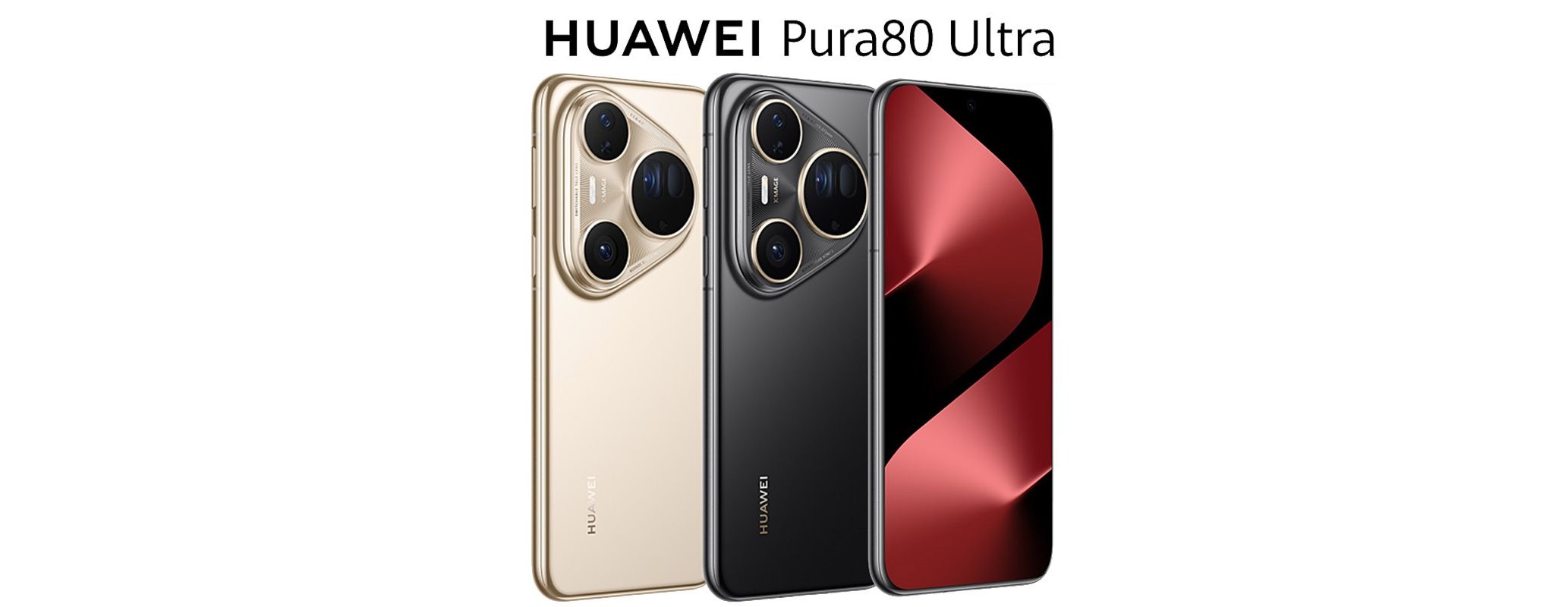
The Pura 80 Ultra emerged as an attempt to carefully bridge the gap between last year’s flagship and what the series had long promised. Several key improvements were made: screen brightness increased by about 18%, making it easier to read in sunlight; battery life grew by almost an hour of active screen time, roughly a 12% efficiency gain; camera detail improved by around 22% with a noticeably wider dynamic range. The body slimmed by 0.3 mm and lost 7 grams, which is immediately noticeable. This model appears as a logical choice for those prioritizing comfort in daily use: students will appreciate battery life, mobile photographers the camera, and heavy screen users the brightness reserve.
Design and feel
The body is constructed from a combination of matte glass and smooth aluminum around the perimeter. Due to the subtle satin finish, the back panel barely collects fingerprints. Thickness is around 8.2 mm, weight about 233 g. Compared to the previous model, it is slightly lighter and thinner, allowing the phone to sit more naturally in hand. The center of gravity is closer to the middle, making one-handed use easier. The surface feels pleasant and “warm,” without the cold-glass sensation even in winter.
Display and camera
The screen feels more confident in bright light: peak brightness reaches about 2800 nits, roughly 18% higher than before. The image has soft saturation without excessive contrast, and the 120 Hz refresh rate ensures smooth, natural scrolling. Colors appear slightly warmer, but without a yellow tint. The camera feels reworked: autofocus locks faster, especially in motion; night scenes retain more fine textures; stabilization works smoothly without sudden jerks.
Performance
The device runs on the latest flagship Kirin chip with speeds up to 2.25 GHz, and the interface feels about 15% faster than last year’s model. There is ample memory for any task, and multitasking is smooth: switching between social media, YouTube, maps, and messengers occurs without stutter. In games, it warms moderately, though long sessions in heavy titles still raise temperature. City navigation is accurate, and maps update quickly.
Software features
The device runs the latest version of HarmonyOS, with a lighter-feeling interface: animations are faster, transitions shorter. Settings are structured more conveniently, so finding parameters is easy. AI functions operate quietly, without aggressive pop-ups. Headphone sound is balanced, and multimedia overall sounds wider than some models in the same segment.
Battery and charging
The battery consistently delivers around 7–7.5 hours of active screen time. Video drains noticeably slower — about 8% per hour. Gaming consumption is higher, around 17–18%, and GPS usage during walks uses about 10% per hour. Compared to the previous model, battery life improved by roughly 12%, noticeable in normal use: the phone stays alive longer into the evening and rarely forces a search for a charger. Fast charging brings it to roughly 60% in half an hour, convenient for travel.
Final impressions
After several days of use, it feels like a calm, well-thought-out flagship focused on comfort and stability. It suits those who take lots of photos, spend time on social media, frequently use navigation, or work with media. Compromises mainly concern heavy gaming and heating during prolonged use, but overall, the smartphone provides a steady experience and does not let you down in daily tasks.

 0
0
Latest reviews
23 June 2023

Artem were helpful in deciding 14 pro max , always excellent team..
16 June 2023
..
 Colin D.
16 June 2023
Quick and efficiante service..
Robert O.
09 June 2023
..
Katie B.
02 June 2023
amazing..
Randy L.
30 May 2023
Excellent service and an awesome ambience! Smaller compared to the other Apple stores. Less customers meant faster service...

22 October 2022
The best appliance store in Sevastopol. The prices are lower than at competitors, and the service is just TOP. A special thanks to manager Evgeniy for his help and for answering all my questions, he i..
 Anna
Anna


